The Effectiveness of Feng Shui
1. Does Feng Shui Work?
 I
am sure all of you are aware that only true Feng Shui works. So the crux
is: how can we distinguish the genuine one from the false one?
Before we
answer that question, we must be aware that in ancient time, (unlike modern
time) the teaching and passing down of Chinese Metaphysics is not taught
openly. Even the teacher with genuine lineage may not pass down complete
knowledge to his student, but reserve what the teacher has learned from
his experience to his personal private indoor student or disciple (there
is difference between student and disciple). That is to say, using modern
analogy, all the students get the same lesson note, but not all of them
obtained what the teacher has learned from his experience or working know-how.
This may have created the situation where students can only 'take part
as whole' 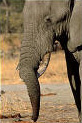 (several
blind persons trying to figure out how an elephant looks like by touching
it, but each blind person only touching a part of the elephant). Students
then have to rely on their own feel about. Whether they get to succeed
in their study or not still depend very much on their opportunity and
their effort (E.g. whether they have financial support that allow them
not to work but get to travel to different places to examine feng shui,
etc.) Therefore, only limited few gets to successfully grasp the real
essence and teaching in feng shui. Those that passed down from 1 generation
to another generation by lineage are in very limited number only.
2. Is the Usefulness in Feng Shui is just to seek 'Wealth'?
 I
am sure you have heard this question before: If (Yin house) Feng Shui
really works, why can't we see rich descendents of famous Feng Shui practitioners.
Actually this is due to one's aspiration and wish and depend the way on how one is looking at things. Firstly, we need to keep in mind that, the temperament of those learned predecessors or forefathers feng shui masters in ancient time are not wealth or fame-based, if they are the so-called materialists in modern time, then they would just allocate the best feng shui to their own and family members, and why should they have to travel here and there to perform audits for others and to seek livelihood?
There are
a lot of ancient FS masters who do not seek fame and wealth. They lived
their lives complied with religious requirements. They cherish more on
doing good deeds and accumulating merits and virtual. According to their
religion belief, they look upon themselves as 'Jia Pi Nang' (false body).
They would not be sentimentally attached to wealth and family members. (Our friends with Buddhism or Daoism background will be familiar with
this 'renounce the world' and 'experience the real world' practice). How
would they want to ask for unnecessary trouble (wealth and fame is dust
of the secular)? They will only enlighten people that is be fated to meet
or help on their journey. Further, in this world, we do not just measure
'fine/good' with wealth. Therefore, we cannot judge the effectiveness
of feng shui in terms of whether a person will flourish.
3. The Extent and Way of the Effectiveness of Feng Shui
I like to
discuss the question on the extent/degree and way of the effectiveness
of feng shui. First of all, in the study of feng shui, we pay major attention
to coordination of Tian (Heaven) Dao, Di (Earth) Dao and Ren (Human) Dao,
so that it can have an auspicious result. A simpler way of expressing
it is: to achieve unity and harmony in terms of heaven and man. Its effect
is different from what is current and handed down from ancient time. There
are a lot of old feng shui stories, after passing down from one generation
to another generation, were greatly exaggerated to make them more fascinating.
To a large extent, they are not true to the fact. Those stories usually
told that how after the placement of feng shui, a beggar can become rich
very soon. Actually, feng shui can only improve a beggar's life from poverty
to self-sufficiency. By analogy, we can help an ordinary person to improve
his life from self-sufficiency to have some savings. This is to say, feng
shui can improve a person's life, but we need to take into consideration
of the 'starting point'. Every person has different 'starting point' in
this world. I like to use  medical
field as an illustration. A patient with a minor illness can be healed
very fast under the care of a diligent doctor. But another patient with
a serious illness, even under the care of a very good and diligent doctor,
will require time to be healed. But the 3rd patient who has a fatal illness,
however good a doctor is, he can only release the pain and suffering,
and cannot heal the disease.
The other issue is 'prescribing the disease with the right medicine'. If feng shui can improve the luck of a person, then we must discuss what luck is. From the Chinese way of view, a person is made up of 5 elements (metal, water, wood, fire and earth) and 5 False (earth, water, wind, fire, and empty), therefore, the combination of that person's 5 elements will affect his 4 pillars of destiny. This is the pre-heaven/inborn pattern. Then the effect of the meeting with 5 elements of the current luck period and the relative interactions of the 5 elements of the location will be reflected on a person's good luck or bad luck (The postnatal/later heaven application).
There are
a lot of different schools of thought in feng shui.  The
popular one places emphasis on 'San Yuan' (3 Cycles) - longitude and space,
5 elements and time 5 elements and 'San He' (3 Combinations) - horizontal
and interval, plane 5 elements and earth 5 elements. Therefore if we use
San Yuan for feng shui placement, auspicious result can come true within
a short while, that is why a lot of people using it, as this generation
wants quick result, in order to solve the present difficulty. Because
this is a short-term result, it does not really affect the temperament
of the 5 elements. This is just a stopgap measure. If we use 'San He'
feng shui placement, the result came from earth (qi). It would then slowly
change the pre-heaven 5 elements temperament of a person. This is a radical
measure to get at the root. This is the focal point of how practitioner
view at fast and slow effect of 'facing' and 'mountain'.
I have no intention to boast which school is better, but to say that a true, good and complete feng shui placement needs to deal with 2 or more things. Don't we see a doctor need to assess the situation of a patient before decide to merely alleviate symptoms of sickness or to get at the root of the sickness.
 My
only wish is that this article can inspire those who want to learn feng
shui or those who do not know what feng shui is yet.