Vastu Relevance To Modern Business
In recent times, there has been a global rise in the importance of Vastu in not only its application to residences where general health and happiness are of paramount importance but also in commercial buildings where proper inflow and outflow of funds reign supreme.
Besides the structural and architectural beauty, there are other aspects that Vastu looks into to make the building, the ambience and environment conducive for successful business meetings. They felt that the land and the structures on the land were living organisms, the land being the womb (of mother earth) and the structure, the seed. Their well-being was so necessary for a healthy offspring-the health and happiness of the residents.
The ancients have spoken of various plans (Mandalas) and have recognized the positions of the primary elements of nature (Pancha Mahabhoota) in the plan referred to as peeta. The proper placement of these primary elements, viz., water (udaka), fire (dahana or agni), air or wind (vayu), ether or space (gagana) and earth (prithvi) can assist in proper exchange of ideas between business collaborators for successful business meetings. They have also spoken of the various energies coming from the different directions.
General Topography
General topography around can conform to certain simple Vastu requirements.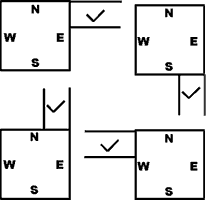 Ideally,
there should be other buildings and/or physical blocks etc. to the South and
West as defence from the South-west energies that are generally not supportive.
To the North and East there can exist water areas and open spaces which can
add to proper communication skills so very necessary for good business.
While selecting your site, avoid areas where several roads converge on your
site.
Roads or corridors or passages jutting into your office/workplace/structure needs to be carefully considered too. When they become a Shoola (spear) at certain areas certain caution is necessary. North of North-east and east of North-east are good, South of South-east and West of North-west are acceptable. North of North-west and East of South-east roads/corridors/passages are better avoided. It would be good to steer clear of South of South-west and West of South-westroads/corridors/passages.
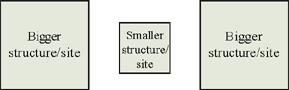 Avoid
selection of a structure/site that is clubbed between two bigger structures/sites.
Have the building oriented to the cardinal directions only. As far as feasible,
shun dissimilar floor levels. However, if this becomes inevitable, settle for
elevated heights in the South and West and lower heights in the North and East.
Avoid triangle and other irregular shapes for your building. Walls that orient 900 to each other are approved. Plainly put, rectangular structures are recommended. Our ancients compared a building (with several storeys) to a musical instrument. Any stringed instrument like the thambura, veena, violin, guitar, sitar, etc., that is meant to give rhythm and music has the distance between successive strings reducing as they go up. Like-wise, if your building needs several floors, let the height of each floor be lesser than the previous floor. In fact, Brihat Samhita suggests 1/12th as the reducing unit.
Importance of Mahadwara (Main Door)
When building or buying your business premises, give enough thought to the main entry and the main door. As I have pointed out repeatedly in my earlier articles, the following openings based on the Paramasayika Mandala (9-grid plan) are suggested for main doors. On the Eastern side, the second, third and fourth grids called Parjanya, Jayanta and Indra are the exalted door openings. On the Southern side, you have the fourth grid, Brihatakshata. You have Kusumadanta and Varuna, the fourth and fifth grids respectively, on the Western side. On the Northern side, you have the exalted doorways in the third, fourth and fifth grids, respectively called Mukhya, Bhallata and Soma.Arranging the Interiors
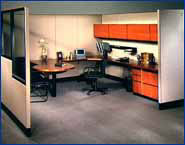
Let us now look into the interiors. Apart from general considerations of proper lighting and ventilation, proper placement of personnel and their furniture based on some basic guidelines of Vastu are recommended.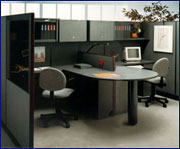 The
South-west or South of the structure can be reserved for the chairman, director
or the general manager. You can have your seating in the South-west corners
of your room facing East and arrange your desk in such a way that you sit on
your chair from the North East of your chamber. Important documents,
cash and other assets that need to be taken care off, can be in the South-west
of your rooms. Files that need to be attended to by your subordinates can be
set aside in the North-West of your room for swift clearance.
The North and North-East sectors are ideal for people managing the financial records. Within that sector allotted for accounts section, the financial or accounts manager can be seated in the South-West facing East. Rest of the staff, mainly concerned with writing of the accounts, can face North.
 As
the center of an area relates to the Brahmastana or the place of zero ego and
total awareness, conference rooms where serious discussions between the business
partners or between the management and the labour takes place, can be located
there. Where nothing much can be done, this central area can be kept totally
clean, and the better way of doing this is to place an idol of God in the exact
center. The North-East sector of the office is also recommended for conference
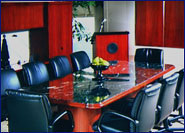
rooms. In the conference room, the chairman's seat can be placed such that he
faces North or East and the other people can face each other in the East-West
axis. Conference room can have their walls painted white or lighter shades
of green.
 Generators,
inverters, computers, transformers etc. find a habitable place in the South-East
sector. With this principle in mind, the various rooms of the chairman,
directors, managers and staff can be designed so that the South-East corners
of the respective rooms are reserved for such appliances. This sector
is also ideal for having kitchens and pantry. Kitchen and dining areas can have
lighter shades of orange on their walls.
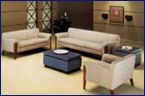 General
lounges where employees just relax for lunch and other non-business activities,
can be planned in the North-West sectors of the office. Toilets can also be
located in this sector. The North-West of the site can have the office garden
too. Business merchandise that needs to be marketed also finds the North-West
sector compatible for their storage. Relaxing areas can have walls with soft
hues of blue.
 Generally
speaking, have your doors on the North of North-East, East of North-East, West
of North-West and South of South-East. Let not your door directly face a staircase.
If it does, make use of plants to carefully camouflage the area and this helps
diffuse the negative energies that barge into your doorway. Have the doors
opening inside in the clock-wise direction. Avoid door closers that forcefully
activate extreme energy into your room/office. Normal curtains should
be good enough. As mentioned in the earlier part of this article, avoid
passages jutting into your doors.
Avoid untidiness at the entrance of your room/office. As the ancients put it, avoid a Dwara Shoola (any obstruction to your door). Avoid sitting under beams. If you have to, conceal the beams with false ceilings.
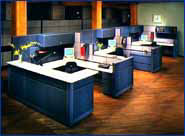 Mezzanine
floors can be in the South, West and South-West sectors of the building/office.
General administrative staff that need to face each other can best be seated
facing East-West axis.
Concluding, our ancients have handed over the secrets in the form of Vastu to make our life more meaningful. By properly planning your office/structure/furniture as per Vastu, you can regulate the energies cosmic and human-to make your business prosper. We have, of course, always to remember that Vastu optimizes the positive signals and reduces the impact of the negative signals that are defined by our astrological charts.