|
|
 |
|
Feng Shui Times Forums is 2 years old! Come join us for Feng Shui discussions or just a cup of coffee! |
|
| |
|
| |
|
| The Chi Of Earth - Zen Flowers
|
|
In Feng Shui the use of fragrant fresh flowers and lush green plants are often suggested as enhancements for the flow of chi. For most of us, however, we bring flowers into our home—whether from the florists or our own gardens—with little more thought than placing them in a vase and then setting them aside. In the art of placement, we look for the right color floral to decorate the appropriate sector of the pakua : red or pink for relationships, blue for wealth, green foliage for health. As we look out our windows we study landforms and observe the details of the natural world. Can you see the Dragons in the hills or the comforting Black Tortoise embracing you?
Heaven (Lha) is above us, below us is the Earth (Lu) and in between is Man (nyen). The Tibetans call this the “hierachy” of the natural word. “Lha, Nyen and Lu describe the protocol and the decorum of the earth itself,” teaches Trunpja Rinopoche, “ and they show how human beings can weave themselves into the texture of basic reality”.
To arrange flowers is to express the life of flowers. Ikebana, the Japanese art of flower arrangement, traces its history back to the 6th century where the Buddhist priests would offer flowers to appease the spirits of the dead. In these rather crude arrangements both the flowers and the branches were made to point towards Heaven as an indication of faith. By the middle of the 15th century, ikebana became an art form independent of its religious origins but still maintained its symbolic overtones of representing the balance between Heaven, Man and Earth.
As a poem or a painting made with flowers, ikebana expresses both the beauty of flowers and the longing in our own hearts. A flower, a plant or a tree looks perfect in its natural environment. It cannot be improved upon. If we cut it down to bring it into our home how can we duplicate its beauty? So, as we try to arrange it in its natural state, to feel the plants unspoken words and combine it with our own spirit, then with the help of nature, beauty is expressed by man's hand.
We tend to assume that nature is something obvious and apparent to anyone, but actually, when we seek a true expression of nature, we find it always changing and impossible to capture. The only way to catch hold of nature is to seize some point of it—the rib of a fan, for example—and make that hardly noticed detail a personal expression of nature. ---Toshiro Kawase.
|
|
This article is brought to you by |
|
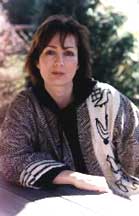
Anthea Appel
Anthea Appel is a feng shui consultant for home and business. She has studied Shamanic traditions all her life, and also feng shui at the BTB/GEO’s (Geomancy Education Organization. Anthea learned the Xuan Kong method of feng shui with the American Feng Shui Institute, founded by Master Larry Sang.
Please visit her site at www.chiofearth.com
email :
[email protected]
|
|
|
|
|
|
|
|
|
|
| |
|
|
|


