|
|
 |
|
|
| |
|
| |
|
| Feng Shui: A Cultural Renaissance
|
|
Western Society has come to know Feng Shui as the Ancient Chinese art of placement used to balance and harmonize ones environment. On the other hand, Feng Shui for Asians is much more. It is imbedded within their culture and permeates throughout their way of life. The most recent interest comes from Chinese Canadians from all generations. This new keen interest among Chinese Canadians comes out of a genuine interest to re-discover their deep cultural heritage rather than social trendiness. This group has embarked upon a cultural renaissance, a re-birth in old cultural beliefs, attitudes and way of life.
When translated from the Chinese language, the words "Feng Shui" literally mean "Wind Water". It is believed that Feng Shui brings forth the balance of the utmost harmonious living conditions between heaven and earth. Tapping into the earth luck energies (chi) will harmonize living conditions within our lives and will attract positive health, wealth and prosperity.
This ancient practice is believed to be in existence for approximately 6000 years. Feng Shui was originally used for the sole purpose of charting the most auspicious location to bury the dead. It was believed that the location of the burial site of ones ancestors would have direct influence on their descendants' earth luck. As time past, this practice was applied to "the house of the living". Feng Shui today, is still practiced very strongly in the Orient for burying the dead as well as used for homes and businesses.
The two true Classical Authentic systems of Feng Shui are "San He" and "San Yuan". San He is a study of Landscape (form/landscape school), Water Dragon Classics (study of waterways), Directions and Pa Chai (Eight mansions). San Yuan is a study of the "Flying Stars formula" which looks at the intangible forces, time dimensions of directional and locational influences of bad and good energies. At the centre of these ancient formulae, is the Lou Pan Compass. The Lou pan compass is an ancient Chinese compass which houses the formulae and information that allows a Feng Shui Master or Professional Practitioner to be able to perform a Feng Shui Audit of a person's home or office. Feng Shui Masters and professional Feng Shui Practitioners from all over the world use these two systems today.
Many schools have emerged in recent years in the Western World with the exploding interest in Feng Shui. Black Hat Sect, Pyramid School, Symbolic Feng Shui, Intuitive Feng Shui are some examples of the many "new schools" that have surfaced. The common belief, within these "new schools" is that Feng Shui is the practice of obtaining balance in one's life through hanging a few crystals and the re-arrangement of furniture and objects within one's space. This is merely scratching the surface.
Authentic and traditional Feng Shui is a sophisticated and complex system comprised of many layers of formulae, mathematical calculations and applications. Masters spend a lifetime studying and deciphering ancient texts hidden in the form of rhymes and riddles in order to reveal and understand the secrets and formulae involved. Serious students and practitioners embark on years of study to fully comprehend the formulae of Feng Shui.
Until recently, the secrets of Feng Shui, have been exclusive to Asian Masters. Their secrets were passed down from Master to disciple. It is said that Feng Shui Masters would rather die then divulge their formulae and secrets to an unworthy disciple. The exploding interest in Feng Shui around the world has caused great confusion over what is deemed to be true Feng Shui by Easterners and what "New-age practitioners" are passing on as Feng Shui.
|
|
This article is brought to you by |
|
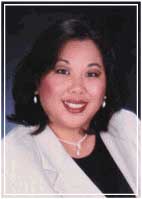
Susan Chow
Susan Chow is a "Feng Shui Mastery" graduate of Grand Master Yap Cheng Hai. She is a well sought after Authentic Feng Shui practitioner, speaker and writer in Canada and offers workshops, courses and mentoring programs in authentic and traditional Feng Shui. After years of learning from other teachers and Masters, Susan now practices and is an advocate for authentic Chinese classical Feng Shui as taught by Grand Master Yap Cheng Hai and the Yap Cheng Hai Feng Shui Center of Excellence™.
|
|
|
|
|
|
|
|
|
|
| |
|
|
|


