|
|
 |
|
Feng Shui Times would like to wish all our readers a very HAPPY CHINESE NEW YEAR!
|
|
| |
|
| |
|
| Feng Shui Mastery Excursion Series: Imperial China - Day 1
|
|
|
DAY 1: Dragon Spotting at Yong Ling Mausoleum - reported
by Bernice Low
On the itinerary for the
first day of the Mastery Academy Imperial China Excursion Series course was
a visit to Yong Ling Mausoleum, located some 3 hours drive outside of Shen Yang.
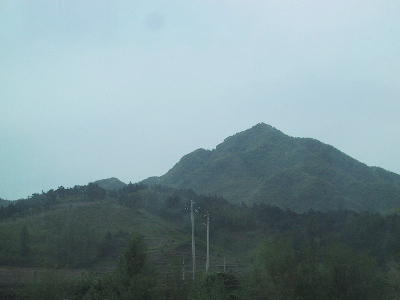
Trying to spot the Dragon's Vein |
As
we started to move away from the city, students began to notice how the
quality of the Dragons (Mountains) was starting to change. From them till
we reached the Yong Ling Mausoleum, it was an eye-opening experience for
the students as they began to identify and pick out the various Mountain
Luan Tou (Forms), such as Imperial Seal, Huge Door, Greedy Wolf, Camel Mountain
and Sky Horse. |
Students excitedly peered
out the windows of their buses, trying hard to spot the various forms that had
been discussed during the briefing the day before and also, keeping an eye out
for the all important Dragons Veins and the Qi powerspot, the Long Xue or Dragon
Spot.
| The
real Feng Shui fun started as we neared the Yong Ling Mausoleum. The Yong
Ling Mausoleum is the location of the tomb of Nuerba, the grandfather of
Nuerhachi. According to Chinese history, Nuerhachi is man who unified the
NüZhen tribes (later known as Manchus). It was his son, Huang TaiJi
who founded the Qing Dynasty. |
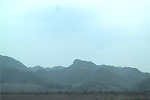
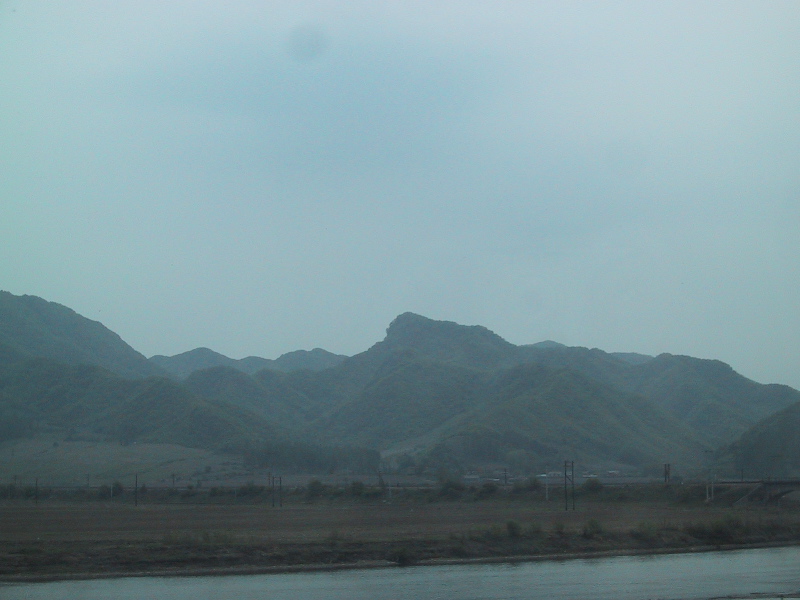
Walking
the Mountains' from our bus. This looks like a Flag Mountain |
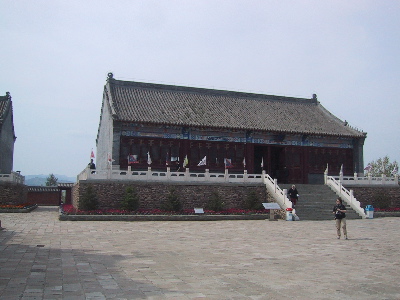
At Yong Ling, which is one
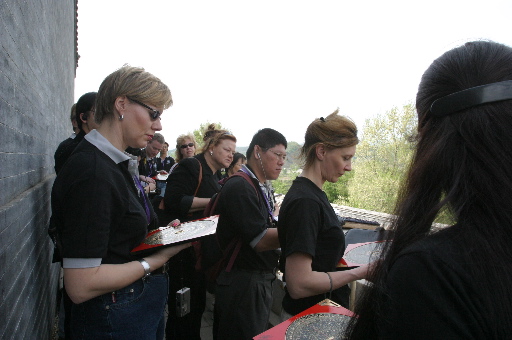
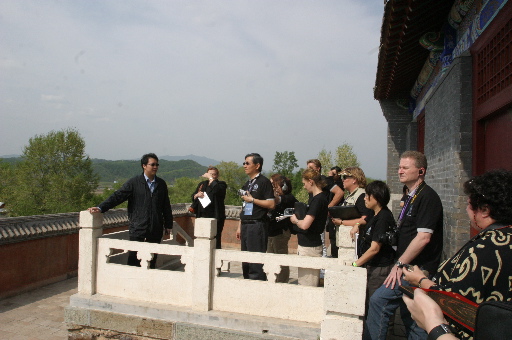
of the Early Qing Tombs, students were first asked by Joey to go in their groups
to conduct their own analysis of the surrounding landform and to take measurements
using their Luo Pans. Everyone then met back to discuss their findings with
each other and to hear Joey’s analysis of the landforms and Feng Shui
in the area.
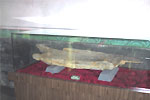
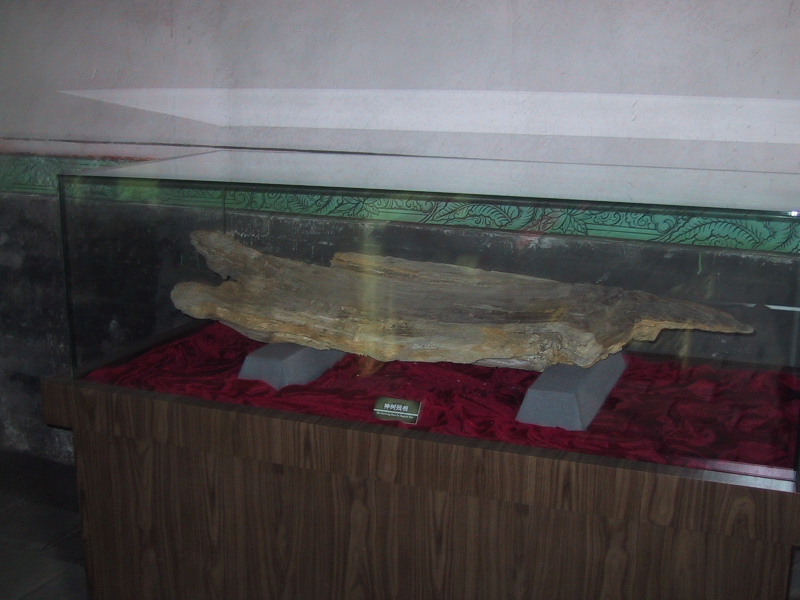
A
piece of the original Elm tree from Nuerba's tomb at Yong Ling Mausoleum
|
Legend
has it that the location of the burial ground was discovered by Nuerhachi
by accident. One day, whilst carrying an urn containing the remains of
his grandfather and searching for a suitable burial spot, Nuerhachi paused
at Yong Ling. He then placed the urn of his grandfather’s remains
between the roots of an Elm tree that was growing there. When he returned
with a Feng Shui master to examine the area, the roots had already wrapped
around their urn, making removal possible.
|
The Feng Shui Master noted
the surrounding forms in the area formed a superior structure, known today as
Reverse Dragon Facing its Ancestors. This highly unique and extremely special
structure is what enabled the descendants of Nuerba (Nuerhachi and his son,
Huang Tai Ji) to subsequently defeat the Ming Dynasty and found their own Dynasty,
the Qing.
As Joey pointed out during
his briefing and analysis after all the students had shared their own findings,
Yong Ling demonstrates how the right land form is essential towards achieving
truly potent and lasting Feng Shui.
Along the way to Yong Ling,
there are Flag and Drum Mountains, symbolising armies and military might. The
‘Sar’ or embrace around Yong Ling originates from Chastity Mountains,
a pre-requisite to creating Emperor class structures. In front, there are prostrating
Table Mountains in the distance. All these landform elements create a superior
structure (known as an Emperor Formation) which propels the descendants of Nuerba
to unify the Manchus, defeat the Ming and create a Dynasty.
Nuraba’s tomb and
the Emperor Formation surrounding it gave birth to a Dynasty that lasted almost
260 years (1644-1911) and spanned 12 Emperors. Interestingly, the humps on the
Mountain behind Nuraba’s tomb number precisely 12.
The Yong Ling Mausoleum
is a perfect example of the environment working 100 percent, focused in on one
spot, that is the Dragon Spot. It demonstrates how with the right land forms
and superior structure, Flying Stars pales in significance.
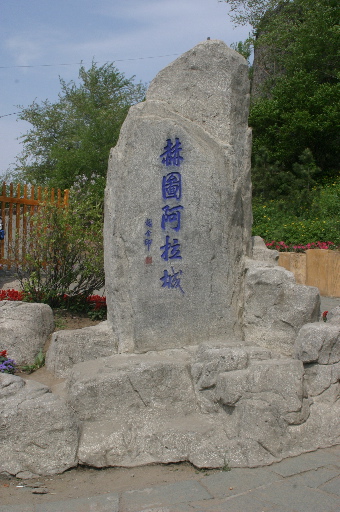
HE TU ALA CITY:
FENG SHUI FOR A CITY
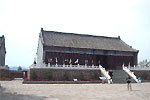
Click
To Enlarge
|
After
lunch, we took a short 15 minutes to reach our next destination, He Tu ALa
City, the seat of power of Nuerhachi and where the Qing mustered up their
forces to begin the assault on the Ming troops. |
Built by Nuerhachi as the
first capital of the Qing (later, Nuerhachi moved the capital of Qing to the
city known today as Shen Yang), He Tu ALa City again provided the students the
opportunity to observe how forms in the surrounding environment, such as the
White Tiger Holding the Imperial Seal and the position of the water mouth and
the river, create potent and powerful Feng Shui for an entire city.
|
At He Tu Ala City,
students were again asked to break up into their own groups and to conduct
their own analysis of the area, using their Luo Pans.
Later, Joey showed
the students how the embrace wrapped the city and how to apply San He,
San Yuen and Xuan Kong systems to the Feng Shui of the city.
|
Click To Enlarge |
The critical feature of
He Tu ALa City is the land formation, followed by the correct placement of the
door, in this case, the entrance to He Tu ALa City. As Joey, in his inimitable
style summed it up: " Doing Feng Shui for a city is not about measuring
every single door and road. If the formation is right, place door at the right
place and Qi will flow in."
For more information,
please log on to Mastery Academy web site: http://www.masteryacademy.com/
WHAT
THE STUDENTS HAD TO SAY:
What I learnt to
day is no matter how much formalism and book work – when you get there,
it’s where you start again – it’s going back to basics again.
What I’ve got to learn is to recognise what I’m looking and to recognise
what the land is telling me – it’s talking to me but not sharing
with me – I feel like I’ve gone right back to M1 again. The further
I get, the less I know – but it’s there – it’s proper
Feng Shui. If the land’s no good, the land’s no good. – JAYNE
GOODRICK
Doing the actual
Feng Shui was wonderful – I was hopeless, absolutely hopeless –
I think I got the water mouth once – but when you see it, it makes sense.
I find it fascinating – DIANE GROBLER
I did feel the
energy – I think I was very tense – the harder I tried, the harder
I couldn’t find it. The mountain actually looks like a Dragon and that
is amazing, a special feeling – I found the Dragon! –
RINA LEE
At first, I couldn’t
realise what are these designs – I was trying to see the mountains in
my country Greece but could not see the resemblance to the drawings in the book
– this is the first time I have seen the embrace and it was really amazing
and the table mountain and the dragon and the formations – IRENE
I was too concentrated
on the house, on the palace facing and the reality is the opposite. I always
thought the facing means you have to face the water but if the whole land is
prosperous, it doesn’t matter where you face. That was a big shock to
me. The formation is first then look at the house – ALEX HO
All the time Joey
stressed on big structure and now I realise what it really means and what it
means by San He and when to use San Yuen formulaes and I could recognise all
the mountains finally and he was all the time telling me TTDI has the huge door
and I could not understand but today, straight away I got it – MARGARET
YIP
|
|
This article is brought to you by |
|
Bernice Low
Bernice Low has been writing since 1992 and has since published in the Star and various Malaysian magazines, including Her World, Men’s Review and Education Quarterly. Bernice served as Editor (and later columnist) for the Malaysian Star Trek Fan Club’s quarterly publication, DATABANKS and as Design Editor of IMPACT, a weekly campus publication of the University of Nottingham, UK. She also briefly served a stint as Junior Copy Editor and writer at The Edge, Malaysia’s leading financial publication.
|
|
|
|
|
|
|
|
|
|
| |
|
|
|