Defining
time
The Chinese
observe the Earth orbit around the Sun to define years and months. A year
is measured by the Sun’s movement through 360 degree arc in the
zodiac. Time aspects are defined by following and marking the exact position
of earth on the ecliptic path around the sun.
In the western
calendar, the first day of Spring is March 21st, the Vernal Equinox. The
Summer Solstice is June 21st the beginning of Summer. Autumn begins on
September 22 rd, the Autumn Equinox. Winter begins on December 22 nd,
the Winter Solstice. These are dates relevant to the Northern Hemispheres.
In China,
spring season is calculated with the Equinox as the midpoint not the beginning.
This makes Spring begin 4th or 5th of February of any given year. The
start of a year is a global event, and is taken from astronomical realities,
rather than observation of local climatic or seasonal conditions. The
start of a year is taken as 45 Zodiacal degrees or 45 days before 21 March
of any year. Local conditions like climate, season etc do not play any
role here. The start of a year was taken to be when the sun was halfway
between the shortest day – Winter Solstice on the Northern hemisphere
– and the day on which day and night are even – Vernal Equinox.
The common denominator for both hemispheres to find the start of a year
is 45 days before the sun crosses the ecliptic from South to North. This
crossing coincides with the Spring Equinox on the Northern hemisphere
and with the Autumn Equinox on the Southern hemisphere.
In his website
http://www.geocities.com/heluo8
He Luo calls for a change in terminology: “We define four realities
in measuring a year, i.e. Spring Equinox, Summer Solstice, Autumn Equinox
and Winter Solstice. These phenomenon are equally observable from both
Northern and Southern hemisphere. Therefore we should refrain from terminologies
as Summer Solstice or Winter Solstice. These terms have now evidently
proven their misleading effect. Instead, we should from now on use, March
Equinox, September Equinox, June Solstice and December Solstice. Problem
solved.”
24
Jie Qi (Solar Terms)
According
to the Chinese, a solar year is divided into 24 solar terms of approximately
15 days each. Each month has a Jie and a Qi. These periods vary somewhat
in time because the sun completes its apparent 360° path in 365.25
days and this path (called Yellow Road) is elliptical, rather than circular,
causing for the sun’s apparent motion to be sometimes one degree,
sometimes less than one degree, sometimes more than one degree. The 24
Jie and Qi mark the times when the sun reaches 0° and 15° in any
given Zodiacal sign. As an example we can take the Zodiacal sign of Aquarius
and say that a Solar year starts when the sun reaches 15° Aquarius.
The precise
origins of the Chinese calendar are unclear. But legend has it that a
minister of the Emperor Shang Huang Ti created the Kan Zi system. The
system of 20 years periods is said to match the conjunction of Jupiter
and Saturn. The two calendars in use are the Lunar calendar
which is based on the first day of the new moon and the Solar
calendar which begins on the 4th or 5th of February. For exactness, it
is the date and time when the sun reaches 15:00 degrees Aquarius.
The solar
year begins on the day called Li Chun. It usually falls on the 4th Feb
or 5 th Feb. It is when the Sun enters 15 degrees Aquarius. This is the
beginning of the Yi Yue or Yin/Tiger Month. This is the first Jie. In
the middle of the month there is another seasonal point. Every month begins
on a Jie, passes through the Qi, of the month and ends before the next
Jie marks the beginning of the next month. These markers are helpful in
determining the year, month and day pillars.
Observing
the earth orbit around the sun and marking its positions at certain moments
in time was not about the observations of seasons. The association of
seasons came later. The different phases of energy were laymen’s
terms to explain astronomical realities. Farmers and common folks were
more interested in practical realities hence the association of phases
with seasons. It is also just natural that they synchronise astronomical
findings to activities on our planet, like the right time for sowing and
harvesting. The seasons timing might differ between hemispheres but the
five types of qi exhibited is the same kind.
Diagram 20
http://www.geocities.com/heluo8
The earth
orbit around the sun is the same for the Northern hemisphere as the earth
orbit around the sun for the Southern hemisphere. If earth reaches its
point farthest away from the sun, this is true for either hemisphere.
Aphelion and Perihelion are astronomical realities. When earth moves closest
to the sun, it is known as perihelion, this phase is called Water, the
associated season later becoming Winter. When earth then moves away from
the sun, this can be described as expansive energy associated with Wood
or the Spring season. When earth is farthest away from the sun it is known
as aphelion. Aphelion is associated with centrifugal energy in its ultimate
state associated with Fire or the Summer season. Earth on its way to being
closer to the sun again is associated with condensation and its association
being the Earth phase. Finally earth moves back towards the sun even more
and this phase in the earth orbit being associated with Metal energy or
the Autumn season.
January came
to be known as the month with Qi in its lowest potential of energy, where
in reality this was only to mark the moment when the earth was not closest
to the sun, not to link it to the Winter season. Wood is at its prime
in February, March and April on both Northern and Southern hemisphere.
Wood is prime in February, March and April for both hemispheres, because
both hemispheres move away from the sun, not just the Northern hemisphere!
It is clear
the Chinese did not develop these systems by observing the seasons, but
by noting the earth revolving around the sun and linking certain particular
changes in vegetation. The ‘Southern school’ claimed that
the Chinese were not aware of the Southern hemisphere around the time
they developed their Time and Space systems hence it is time to make the
correct adjustments. We cannot change definitions of timing to suit local
conditions on either the Northern hemisphere or Southern hemisphere for
the simple reason time and space study was not a study of seasons.
Feng
Shui helps a business expand Down Under
In 1993
a young couple trying to run a multi media company for a year was disappointed
they did not succeed to get any contract although they tried to negotiate
deals. At the end of that dismal year they made an important decision
to use Feng Shui. They made the changes recommended and they reaped the
benefits. They reasoned that if they kept doing the same things and still
expected changes then they were fooling themselves. Within six months
they won a contract worth 1.3 million. They won accolades for their work
both nationally and internationally. They have never looked back. A team
of only a husband and wife grew within two years to a team as shown in
the picture. From a home run business they relocated 3 times because of
expansion. The Feng Shui techniques I used have stood the test of time.
Their current address is Go Man Go Productions in Fox Studios in Sydney.
Nine years to watch growth and see labour bear fruit. Traditional Feng
Shui is applicable anywhere in the globe.
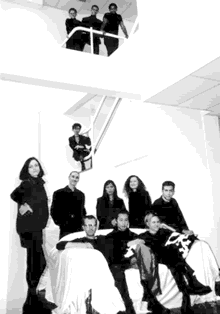
A team of two expands into twelve. |
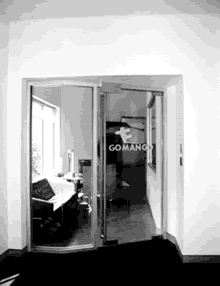
Relocation due to expansion |
 Prestigious
address
Premier
Car Dealer Leads in Prestigious Car Sale


Lexus Car Display Showrooms
Feng Shui
services were provided in 1998. Lexus has gone from strength to strength
and has topped premier sales in Sydney. In 1998, Phil Mc Carrol asked
for a Feng Shui make over for his other car dealership, Toyota. In 1999
another of his Lexus dealership was opened. In all instances traditional
Feng Shui techniques were utilised. Repeat business is proof things are
working well.
What
is the next level?
If exponents
of the north south debate are still at the stage of heat and cold what
then is the next level? In classical Feng Shui the next level is clear.
There are much more advances to be made. There are mountains beyond these
mountains. Unless we climb a peak we will be unable to see the mountains
beyond mountains. Micro Feng Shui is applicable within the home but macro
Feng Shui is a bigger picture. Irrespective of whether we stand south
of the equator or north of the equator, the fact remains that we have
to be good at what we do. If we want to be competitive we need good skills
to go out and perform audits with absolute precision and confidence.
This meeting
of East and West has enhanced the adaptability and acceptance of Feng
Shui. The essence of belief however, is inherently Chinese and with the
philosophies and applications of generations before this, there is proof
and conviction in Feng Shui wisdom. Above all, the recommendations are
practical. No suggestion is made without a basis of fact, no solution
given without a voice of reason. This also applies to this theory of North
South difference.
If we agree
that earth magnetic energy is the same for both hemispheres we need to
abandon the idea that there is a difference in principles.
If we stick
to the differences we are dismissing astronomical findings in Chinese
metaphysics. Then it will be looking at the stars for new answers. Night
sky watching will be a good pastime for a good cause. But the night watching
will be from the Southern hemisphere where the origin of the debate begun.
BIODATA
Siou Foon
Lee
• Master
Graduate of YCH Professional Feng Shui Series
•
Awarded
Mastery Diploma by Grandmaster Yap Cheng Hai
•
Winner
of two prestigious awards from Grandmaster Yap Cheng Hai
•
Fellow
Associate Member of the YCH Feng Shui Network
•
Professional
Trainer
•
Australian
Representative for YCH Feng Shui Centre of Excellence
•
Practicing
Consultant and Principal of Feng Shui Innovations.
Published
with the permission of Ms. Siou-Foon Lee |