|
|
 |
|
Go professional! Get a Lou Pan at 15% discount!
|
|
| |
|
| |
|
| Feng Shui and Gardening by Cate Bramble
|
|
Feng Shui
and Gardening
None of the
popular authors who write or lecture about Feng Shui and gardens know
anything about the subject. They discuss Western landscape philosophy
and call it Feng Shui for the garden. If they actually knew something
they would first discuss Shan Shui (literally "mountain-water")
and how Chinese gardens developed from that art.
A
modern Chinese garden, in China, made with water.
Amateurs with the right
idea
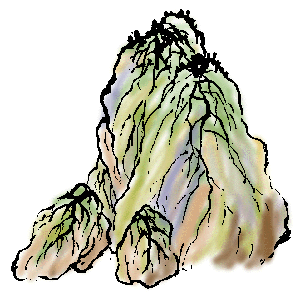 Landscape
design is not just a matter of putting up a building, planting trees and
flowers, or building an artificial mountain. It is a means of revealing
one's attitude of life by displaying landscape esthetically. Landscape
needs to be restrained, gentle, and understated. We should modestly hide,
not boldly dominate as is fashionable in the West. This enables a more
intimate experience and sense of fitting into the environment.
All of Yin
Yang Theory is embodied in design — the harmonious relationship between
humans and natural objects is managed in Naturally So. The Chinese understanding
of human power follows the understanding of Heaven-Earth-Humanity. Human
power is exerted on behalf of subtle landscape preferences guided by the
"Taste of Heaven."
|
|
The Chinese
way of thinking follows a clear path:
- Respect
experiences.
- Discern
the truth by studying the past.
- Stand
between science and theology.
- Combine
ethics with esthetics.
-
In Chinese
history no special ideal or religion controls spiritual life — real life
comes before anything else. Chinese respect nature and self-knowing, and
people adapt into a natural world more easily.
A Chinese
will search for compromise while a Westerner wants a Yes or No answer.
This constitutes fundamentally different approaches to landscape design.
In Western
thought we oscillate between total belief in a Creator (ignoring real
life) or a full belief in human power to explore and dominate the world
(which in many respects also ignores real life). Westerners measure their
world in human dimensions, with the formal garden recognized as a symbol
of human power and achievement. Humans in Western thought are conquerors
and improvers of nature, so people want a walled-in and controlled copy
of Paradise (perfection beyond real life).
By enabling
and worshipping human power, we lose our fear of wildness. We conquer
nature, sanitize and "improve" it. And these ideas are intrinsically Western,
coming as they do from Plato and Christian theology.
There is
an attitude of profit regarding land in the West. The practical and utilitarian
trend is Western, which historically was restricted in the East. In the
East the attitude encompasses humility and respect for the forces of nature
and heaven.
It is very
rare in Chinese design history to place geometrical forms on hilly land,
as is common in Western countries. Only in the Chinese Emperor's gardens
were geometric forms acceptable, because for Chinese they are symbols
of respect for natural forces (heaven and earth).
You will
find nothing about improvement of the land, no modification of perceived
imperfections or a need to control or dominate the landscape. Even the
Son of Heaven would not assume he had the authority to do such a thing.
|
|
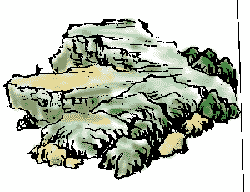 Shan
Shui is the Chinese art of landscape painting which was extended to gardening
and landscape design. Shan Shui implies mountain and water.
Shan
is yang, hard, still, sublime, vertically developed, close to heaven.
Shui
is yin, soft, moveable, horizontally developed, close to earth.
Shui embraces
Shan, Shan surrounds Shui.
There is
space, time, change, feelings, emotions, stories connecting with the essence
of nature. The task of Shan Shui is described as "by a simple brush to
draw the Qi [spirit or essence] of the whole body of the cosmos" or "to
establish the spirit in an ocean of ink."
The Six
Positions in Shan Shui:
Vigor,
Qi and Rhyme
Brush with
a sound structure. (Not dependent on perspective but quality of outline,
diffusion of focus, spiritual esthetics.)
Form follows
object. (realistic attitude)
Color
follows content (realistic attitude).
Management
of position (relates to way of seeing and creating)
Transmission
and copy from the past (experience creative process and deepen understanding
of heritage
|
The Chinese
way to look at landscape.
Perspective
analyzes space and manages forms which influence ways of depicting
a landscape (from one side to another, from one step to the next, "perspective
with scattered focus").
Focus
is not fixed, but arranged in categories (High and Far, Deep and Far,
Level and Far), which depend on what the observer wants to see, appreciate,
and focus on.
- High
and Far
- Great
height and distance combined. To see the immensity of a mountain, the
eye level is intentionally placed very low (like imagination which is
not fixed). This is used to express reverential feelings for morality,
nature, and especially mountains and water.
- Deep
and Far
- Conveys
complex scene with layers and depth, complexity and infinity.
-
- "Through
the winding of scenery we are led to deeper feelings." —Huang Binhong
- Survey
from above, see from a distance and move the viewing to explore the
images behind. Complex images and spatial depth are build up by industrious
observation and depiction which is beyond the real scenery and may be
mystical or illusory. Promotes subjective imagination.
- Level
and Far
- See from
a normal, undramatic position, eye level with wider scope and distance.
Horizontal emphasis provides intimate, smooth, and familiar scenery.
A huge space can show great breadth of mind and reveal a wide range
of emotions and moods.
"The
more zigzag the way, the deeper the scenery. The winding path approaches
the secluded and peaceful place." —Huang Binhong
Life and
landscape are linked. The philosophical conclusion in understanding the
world is what Laozi called Naturally So.
|
The
four landscape elements: 
-
Mountain
-
Water
-
Plant
-
Building
|
The
water is the vein of the mountain, the grass the hair, the clouds an
expression of spirit. —Goxi
 Yin and Yang in the landscape
- Stillness
and movement
- Unity
and variety
- Locality
and generality
- Scenery
and subjective reactions
History:
A Dream of Eternal Life
Landscape
art began before 4 BCE and arose from studies of the elixir of life made
from the sacred plants of fairyland.
The idea
was to design an artificial environment with mountains and water to symbolize
the magic places of the gods, and the magic plants were the favorites
of emperors. This was sometimes referred to as "a jeweled palace in Elfland's
Hills" because the landscape featured certain typical features:
- A centrally
located pool (the Sea of Elfland)
- Three
islands or mountains in the middle of the pool (Ponlai, Fanzhan, Yinzhon)
This comprises
the most basic patterns of Chinese garden.
In the minds
of early Chinese, things on earth depend and rely on each other. The logical
attitude was that humans are not conquerors of nature — we cannot loot
from the earth too much. Our survival depends on heaven and earth together.
Doctrines
about the suitable manner of living were developed and passed down to
succeeding generations in time-tested knowledge. To adapt was the best
way to achieve a balance against contradictory forces, Yin and Yang, which
crystallize all observations and experiences of the world and which serves
as an analog for basic contradictory natural forces.
The Three
(Trinity) — heaven, earth, humanity — is the outcome of the movement from
Tao/Taiji.
To Laozi
it was Tao, One (Qi), Two (Yin + Yang), Three.
To Zhou Duenyi
it was Taiji/Tao, Two (Yin Qi, Yang Qi), five elements, myriad creatures.
The correspondences
summarize all kinds of relationships — from a human body to the environment,
from sensation to philosophy. Nature, society, and humanity form a trinity.
|
Kongzi's
Influence on art, architecture, and gardening
The school
of Kongzi (Confucianism) is a theory about the administration of family
and country which seeks to create order and harmony from the chaos of
the world and presents a positive attitude toward life.
Human fate
is handled by heaven. Harmony between heaven and earth depends on a perfect
order which is paralleled with human social life. Heaven is an ambiguous
concept associated with forms of power — a natural force which has an
intimate relationship with real life.
One should
obey the order of heaven and embody high moral standards to achieve a
benevolent government of family and country. One should start by learning
how to behave, from there one achieves humanity, justice and virtue.
Kongzi said
the Golden Mean or compromise was the core of his teachings. He believed
in and promoted the concept of destiny. There was no god, no devil, only
the order set up by heaven. It is a philosophy of pragmatism and ethics.
He emphasized
participation in social life. As a social being a human should fit into
family and society, find a fitting position in the social order, and behave
according to a certain moral code.
Design activities
are the result of an understanding of the meaning of this social being,
of different positions in the hierarchy and of a moral code conducting
one's behavior. His philosophy translated into town planning and housing
design as well as interior design. The housing pattern, spatial order
of city designs, and interiors in the Forbidden City all relate to Kongzi's
political and philosophical standards.
The influence
relates to land use, landscape design and garden management, but further
understanding of nature, esthetics and landscape design came from Tao
and Chan (Zen).
Buildings
in a Chinese garden relate to the influence of Kongzi. There is a strongly
architectural orientation in Chinese landscape design. Modern landscape
(design not based on the Classics) did not arrive in China until the late
1980s.
Naturally
So, Tao and Te (virtue)
Humanity
models itself on earth, earth on heaven, heaven on the Way, and the
Way on that which is Naturally So. —Laozi
Nature created
itself and should be venerated as the source of life. Daoism says the
world is an entity consisting of a myriad of things derived from an essential
but not entirely tangible Tao, like the Big Bang, born before heaven and
earth which "confusedly formed the world."
Earth, heaven,
and all creatures are organized in the whole structure which is what is
meant by Nature. The logical structure is that humans model themselves
according to earth, earth models on heaven, and heaven models on Tao.
But nature
is both abstract and animate object. All beings on earth are constantly
changing, overcoming, or creating one another. The essence of this complicated
nature is where natural beauty lies.
The
flowing water makes the still mountain move; the vivid trees make the
obdurate stone alive. —Shitao
|
|
A
scenery is not still. It is a refined picture related to seasonal changes
and spiritual responses.
A
landscape then can never be thought of in terms of its visual elements
or pictorial likeness. Coherence means the truth of Tao, the myriad beautiful
creatures and virtue are one.
Human
feeling must associate with objective being to form the Qi and rhyme in
an artistic realm.
To appreciate landscape is to seek not only the
pretty view but the complete understanding of universal coherence through
the use of an expressive yet abstract artistic language. One must depict
unexpected relationships such as changing clouds, mist, lights, rocks,
even the presence of bugs and wildlife to help open one's "inner eye"
to observe and express landscape delights and human wisdom.
You
can look at scenery all you want, but you must imbue your vision with
spiritual sustenance.
|
|
The Chinese
word for garden combines forms for soil, landforms, a well, and an enclosure
plus trees. It is generally interpreted as a man-made place for recreation
containing three elements:
- Flowers,
trees, fishpond
- Buildings
- Artificial
mountain
A landscape
is a living thing that talks to people. Landscape is process, not
pictorial recording. A landscape is a home of feeling, not something to
be shown off. It is a communication with nature. The Western idea of naturalism
is, for Chinese, in extremely poor taste.
|
|
|
This article is brought to you by |

|
Cate Bramble
Cate Bramble is a Feng Shui practitioner, a member of the New Zealand Feng Shui Society, runs a free advice and coaching service for parrots and their caregivers, volunteers as one of the original members of the Council of Israeli Community's Writers' Bureau and is a member of the international Society for Technical Communication. As a professional writer-researcher and practitioner she currently invests her time addressing the dynamics of Feng Shui, the effects of nutrition on parrot behavior and immunology, and investigating the arcane mechanisms of corporate tax software.
She is the author of the “Architect’s Guide to Feng Shui (ISBN : 0750656069) published by Architectural Press, 2003.
|
|
|
|
|
|
|
|
|
|
| |
|
|
|


