| |
 |
| Authentic Feng Shui
|
|
Have you ever wondered what a compass reveals? At first glance, it seems to map the directions of the earth's magnetic fields, helping us find our bearings. While this is true, the ancients, who developed the magnetic geomancer's compass (the loupan) over 4,000 years ago, included rings as shown in the photograph, to read astronomical, astrological, and mathematical data in conjunction with magnetic fields. This information helps interpret the relationship between people and their environment, enabling them to positively transform their lives. The ancients understood, as modern medicine now accepts, that acupuncture directs the flow of energy in the body. Similarly, Feng Shui directs the energy of the environment.
What is Authentic Feng Shui?
Feng Shui is the art of living in balance and harmony with one's environment. Feng Shui means "wind" and "water", two of the most powerful forces of nature. Being able to harness the positive energies of our environment creates success and transformation, as the surrounding energy supports and nourishes our activities.
The Way it Works
Feng Shui requires in-depth observations of the environment, people, locations, and time. How these factors interact with one another reveal what's happening on an invisible, energetic level. These assessments are made using astronomical, astrological, and mathematical systems, including the birth data of all occupants of a dwelling. Once an assessment of these patterns is formulated, recommendations can be made on a case by case basis, describing how to advantageously tap auspicious energy and minimize the negative. Any changes made should harmonize with your own personal taste and style.
History 101
The origins of Feng Shui dates back to around 2200 BCE in Neolithic China. The art was refined over many centuries and produced many learned scholars. Throughout the ages, many emperors forbade the dispensing of Feng Shui to their subjects, thereby securing the "power" for themselves. Violation of this law led many masters to their death.
Until the recent revolution, Feng Shui was an integral part of daily life for the Chinese. It is said that Mao Tse T'ung was a master practitioner and used Feng Shui in his rise to power. Afterwards, he outlawed its practice and destroyed many ancient texts. This had been foreseen, however, and the most valuable texts had already been removed to Taiwan. No longer exclusive to the realm of the Chinese, Feng Shui began its journey westward.
Feng Shui enters American Mainstream
An increasing number of people, who would never have considered using Feng Shui in the past, are now applying its principles. A varsity coach at a prestigious university asked me to perform an audit on his home and offices on campus. Skeptically, he made the recommended changes and has since enjoyed tremendous benefits at home with family and finances. His biggest triumph has been a breakthrough for his team, winning every match. This had not been predicted by their previous seasons' records.
Major corporations, such as Merrill Lynch, Charles Schwab, Citibank, and TD Waterhouse, have been reported to incorporate Feng Shui design principles. British Airways, Cathay Pacific, and Trump Towers add to a growing list.
Questions about Feng Shui
Worldwide fascination with Feng Shui has bred acceptance within the mainstream, but most people do not know what real Feng Shui is all about. What is the difference between traditional Feng Shui and the numerous "new" schools that have arrived on the scene? There is some misunderstanding, and the need exists for clarity in defining authentic Feng Shui from the more modern "pop" versions.
People are beginning to realize that in order to obtain lasting results, superficial skimming won't stand up to scrutiny. Anyone seeking information on Feng Shui faces a deluge of books, articles, and programs, many with confusing and contradictory premises, most of which proclaim "quick fix" solutions. Authentic Feng Shui, like Taoism and Chinese medicine, is not based on superstition, and requires time and diligent commitment for understanding and mastery of the principles.
New Feng Shui
"New" Feng Shui originated in America approximately 20 years ago. Its novelty and promise of "cures" created a sensational wave rich with Chinese cultural symbolism and products. However beautiful or appealing these products are, they are linked to cultural beliefs, often referred to as "superstition" and not related to the practice of authentic Feng Shui. With the use of these attractive "cures", positive results come mainly through intentionality, as opposed to energetic changes in one's environment. As Albert Einstein succinctly stated, "Symbols have the capacity to touch us not just on an intellectual level, but on behavioral and emotional levels as well." As such, bringing attention to a problem and giving it presence in your surroundings can help at any level. Although spiritual, emotional or cultural bonds energetically embossed in certain objects can be healing and transformative, symbolism is not part of authentic Feng Shui. Authentic Feng Shui relies on time-tested, mathematical formulas, with recommendations individualized for each person's specific internal and external energetic situation that work regardless of a person's belief.
Case Study
The following case study highlights how new age Feng Shui can activate negative consequences with random or arbitrary "placement" of fire and water "cures, among others, as well as how the most important factors of a building are overlooked.
A man going through a contentious divorce received "pop" Feng Shui advice to place a couple of pink or red candles in his "relationship corner" to pull in new relationship energy and quell the angst of his departing spouse, along with other symbolic cures. Psychologically, he felt better having shifted his environment around a bit and felt boosted by having made the effort and enlisting support... but things continued to decline.
A traditional Feng Shui practitioner was called in, who took an accurate compass reading of the external landforms and the house. He was asked for the move-in and construction date of the house, as well as his birth data. Charts were created, combined and assessed for compatibility. It was discovered that he has a great house, but he entered through a door in his own personal "loss" direction, his bed was in one of his "arguments and lawsuits" directions, and a water fountain was activating "financial drain". This man was miserable and open to change. The fountain was turned off, the bed was moved into his best sector, and the side door became his main entrance, as it was located in his "wealth and success" direction. Other changes were made based on his internal layout, his four best directions, and harmonious flow of energy throughout the house. This is an actual case, and after implementing the recommendations, he achieved an amicable, out-of-court settlement that both parties were pleased with, as well as improved health and career gains.
In Asia, several of the most respected masters became concerned that authentic Feng Shui was in danger of being lost to an American marketing trend. As a result, authentic, or Classical, Feng Shui was introduced to the West approximately five years ago and is now becoming more widely accepted as the industry standard.
|
|
This article is brought to you by |
|
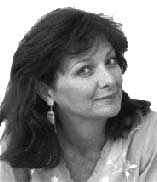
Melissa Kushi
Melissa
Kushi received her master practitioner certification in Asia by Grand
Master Yap Cheng Hai, one of the world's top five Feng Shui Grand Masters.
She brings over 20 years experience in the study, practice and teaching
of natural sciences from the Orient. Skilled in the Classical Schools,
she practices Flying Star 8, Mansions, San He, San Yuan and the Water
Dragon Classics. For more information on classes and lectures on the practical
application of Classical Feng Shui in your life, please visit the website
www.MelissaKushi.com, e-mail Melissa
at [email protected] or
call her at 413-644-9050.
|
|
|
|
|
|
|
|
|
|


